Odoo Maintenance Module Guide: Equipment Management, Maintenance Requests, and Asset Reliability
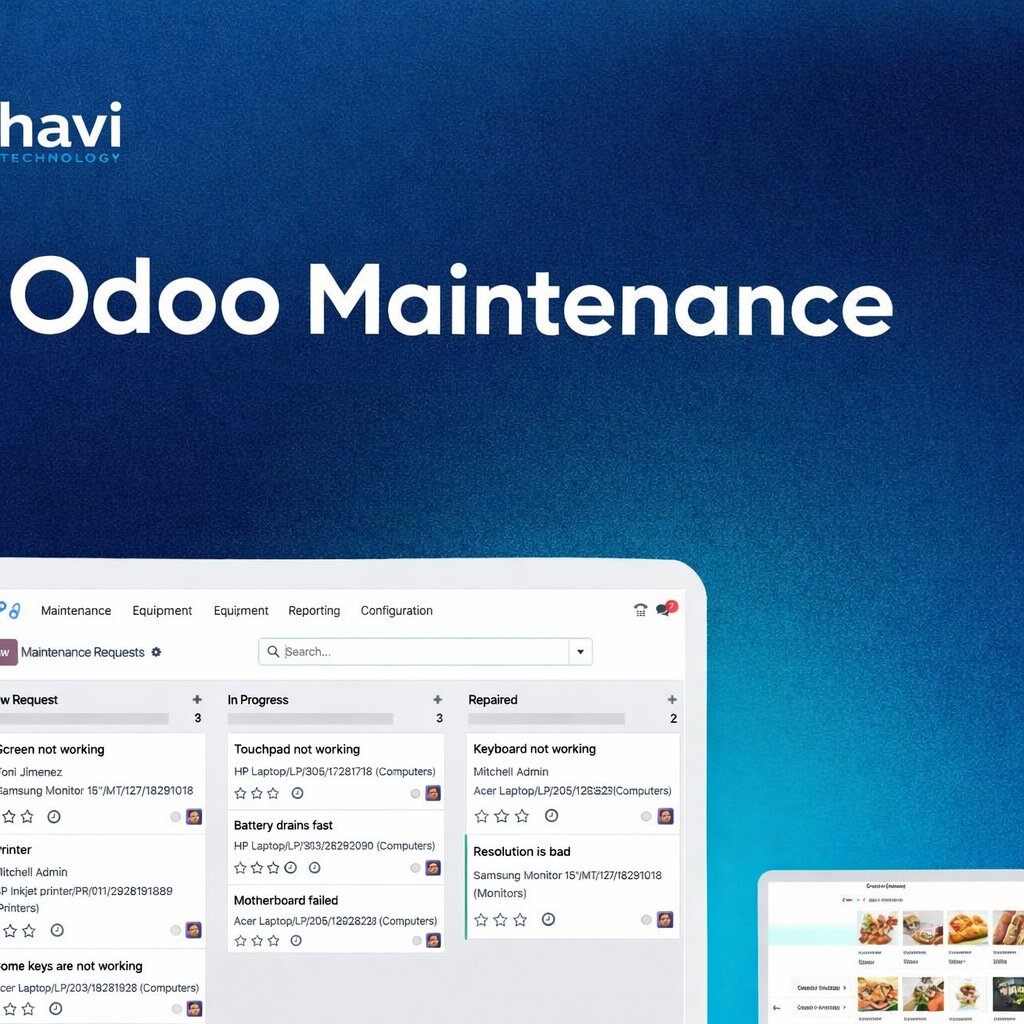
Modern organizations rely heavily on equipment, machinery, vehicles, and infrastructure to maintain operational efficiency. Whether it is a manufacturing plant, logistics company, agricultural enterprise, or facilities management provider, the reliability of physical assets directly impacts productivity and profitability. When equipment fails unexpectedly, it can cause production delays, safety risks, and higher operational costs.
To manage these challenges effectively, businesses are increasingly adopting digital maintenance management systems that help them monitor equipment performance, plan maintenance activities, and coordinate repair workflows. One such solution is the maintenance management application within Odoo.
The Odoo Maintenance module is designed to help organizations manage equipment assets, track maintenance requests, and implement preventive maintenance strategies that improve asset reliability. By integrating maintenance management into a broader ERP ecosystem, companies can gain better visibility into their equipment lifecycle and reduce operational disruptions.
This comprehensive guide explores how Odoo Maintenance supports equipment management, maintenance requests, and long-term asset reliability.
Understanding the Role of Odoo Maintenance in ERP Systems
Maintenance management is a critical operational function that intersects with several business processes. Equipment reliability affects production schedules, facility operations, transportation logistics, and customer service delivery.
The Odoo Maintenance module is part of the broader Odoo ERP ecosystem. This integrated platform connects maintenance management with other enterprise functions such as inventory management, manufacturing operations, accounting, and field service.
Because maintenance activities often require spare parts, technical labor, and operational coordination, integrating maintenance into an ERP environment provides several advantages:
- centralized equipment records across departments
- streamlined maintenance request workflows
- improved communication between maintenance teams and operational staff
- better coordination with spare parts inventory
- data-driven insights into equipment performance
Instead of relying on spreadsheets or isolated software tools, organizations can manage their maintenance operations within a unified system.
What Is the Odoo Maintenance Module?
The Odoo Maintenance module is a digital tool that allows organizations to monitor equipment health, track maintenance activities, and coordinate repairs efficiently.
The module provides a structured environment where maintenance teams can perform tasks such as:
- registering equipment assets
- monitoring equipment lifecycle
- managing maintenance requests
- scheduling preventive maintenance tasks
- assigning technicians to repair jobs
- tracking maintenance performance metrics
By organizing maintenance processes within a centralized platform, businesses can reduce downtime and extend the lifespan of their equipment.
Equipment Management with Odoo Maintenance
Equipment management is the foundation of any maintenance strategy. Without accurate asset records and equipment tracking, it becomes difficult to plan maintenance activities or analyze performance trends.
The Odoo Maintenance module provides tools that allow organizations to maintain detailed equipment profiles and track asset information throughout the lifecycle.
Creating a Centralized Equipment Registry
The first step in implementing a maintenance system is building a comprehensive equipment registry.
Organizations can create equipment records that include information such as:
- equipment name and identification number
- operational location or department
- manufacturer and supplier details
- purchase date and cost
- warranty information
- maintenance history
This centralized registry allows maintenance teams to access equipment data quickly when performing inspections or repairs.
Tracking Equipment Lifecycle
Equipment lifecycle management involves monitoring assets from acquisition through operational use and eventual replacement.
Lifecycle stages typically include:
- Asset acquisition and registration
- Operational monitoring and usage tracking
- Routine maintenance and servicing
- Repair management and failure analysis
- Asset retirement and replacement planning
Tracking lifecycle data allows organizations to evaluate asset performance and determine when maintenance or replacement is required.
Monitoring Equipment Performance
Equipment performance data provides valuable insights into operational efficiency.
Maintenance teams may monitor factors such as:
- equipment operating hours
- frequency of maintenance requests
- downtime incidents
- repair costs over time
By analyzing these metrics, organizations can identify recurring problems and optimize maintenance strategies.
Managing Maintenance Requests in Odoo
Maintenance requests are the starting point of maintenance workflows. They represent the formal documentation of equipment issues that require attention.
The Odoo Maintenance module allows employees, technicians, and managers to create maintenance requests whenever equipment problems arise.
Creating Maintenance Requests
Maintenance requests can be generated in several ways:
- employees reporting equipment malfunctions
- technicians discovering issues during inspections
- automated preventive maintenance schedules triggering tasks
- monitoring systems identifying abnormal equipment conditions
Each request includes important details such as:
- equipment involved
- description of the issue
- priority level
- location of the equipment
- assigned technician or maintenance team
This structured documentation helps ensure that maintenance tasks are addressed efficiently.
Maintenance Request Workflow
Once a maintenance request is submitted, it follows a workflow that guides maintenance teams through the repair process.
Typical workflow stages include:
Issue Identification
An employee or technician identifies a problem with equipment.
Request Submission
A maintenance request is recorded in the system with relevant details.
Technician Assignment
The maintenance manager assigns the request to an appropriate technician or team.
Repair Execution
The technician investigates the issue and performs necessary repairs.
Documentation and Closure
After completing the repair, the technician records the work performed and closes the request.This structured workflow ensures transparency and accountability in maintenance operations.
Repair Management in Odoo Maintenance
Repair management involves coordinating maintenance teams, spare parts, and repair activities to restore equipment functionality.
The Odoo Maintenance module simplifies repair coordination by organizing maintenance tasks within a centralized system.
Assigning Maintenance Teams
Organizations can organize maintenance teams based on equipment type, location, or operational department.
Assigning tasks to specific technicians ensures that repair requests are handled by qualified personnel.
Managing Spare Parts and Materials
Many repair tasks require replacement components or maintenance materials.
Integration with inventory management allows organizations to track spare parts usage during repairs. When technicians use spare parts, the system can automatically update inventory levels.
This integration helps organizations maintain adequate spare parts stock while avoiding overstocking.
Recording Maintenance Activities
Maintenance records provide valuable insights into equipment reliability.
Technicians can document information such as:
- repair procedures performed
- spare parts used
- labor hours spent on repairs
- equipment condition after servicing
These records create a historical database that helps organizations analyze maintenance performance.
Preventive Maintenance and Asset Reliability
Preventive maintenance is one of the most important strategies for maintaining asset reliability.
Instead of waiting for equipment to fail, organizations can schedule maintenance tasks in advance to prevent breakdowns.
The Odoo Maintenance module supports several preventive maintenance approaches.
Time-Based Preventive Maintenance
Time-based maintenance schedules trigger maintenance tasks at regular intervals.
Examples include:
- monthly equipment inspections
- quarterly servicing procedures
- annual system overhauls
This method ensures that equipment receives routine maintenance regardless of usage levels.
Usage-Based Maintenance Scheduling
Some equipment requires maintenance based on usage rather than time.
Examples include:
- machine operating hours
- vehicle mileage
- number of production cycles
Usage-based maintenance ensures that equipment receives service when it reaches specific operational thresholds.
Condition-Based Maintenance
Advanced maintenance strategies rely on monitoring equipment conditions.
Indicators may include:
- vibration levels
- temperature changes
- energy consumption
- performance deviations
When these indicators exceed predefined limits, maintenance tasks can be triggered to prevent failures.
Maintenance Performance Monitoring
Maintenance operations generate valuable operational data that organizations can analyze to improve efficiency.
The Odoo Maintenance module includes reporting and analytics features that help organizations evaluate maintenance performance.
Key Maintenance Metrics
Several performance indicators help organizations measure maintenance effectiveness.
Examples include:
Mean Time Between Failures (MTBF)
Measures the average time between equipment failures.
Mean Time to Repair (MTTR)
Measures how quickly technicians resolve equipment issues.
Equipment Downtime Rate
Indicates how frequently equipment becomes unavailable due to failures.
Maintenance Cost per Asset
Evaluates the financial impact of maintaining each piece of equipment.Monitoring these metrics helps maintenance teams optimize maintenance strategies.
Maintenance Dashboards and Reporting
Maintenance dashboards provide visual insights into equipment performance and repair activities.
Managers can use dashboards to:
- identify recurring equipment failures
- monitor technician productivity
- analyze maintenance trends
- prioritize maintenance resources
These insights support data-driven decision-making.
Integration with Other ERP Modules
One of the key advantages of Odoo Maintenance is its integration with other applications within the ERP ecosystem.
Integration with Manufacturing
Manufacturing equipment failures can trigger maintenance requests automatically. This integration ensures that maintenance teams respond quickly to production disruptions.
Integration with Inventory Management
Spare parts used during maintenance tasks are automatically deducted from inventory, ensuring accurate stock management.
Integration with Quality Management
Equipment issues can affect product quality. Maintenance workflows help identify and resolve equipment problems that impact production quality.
Integration with Field Service
Organizations managing equipment across multiple locations can coordinate maintenance activities through field service teams.
Real-World Use Cases of Odoo Maintenance
The flexibility of the Odoo Maintenance module allows it to support a wide range of industries.
Manufacturing Equipment Maintenance
Manufacturing companies rely on machines and production lines that must operate continuously. Preventive maintenance helps ensure consistent production output.
Facilities and Infrastructure Maintenance
Facility managers must maintain infrastructure such as electrical systems, elevators, HVAC equipment, and building utilities.Maintenance workflows help coordinate inspections and repairs.
Fleet Maintenance for Logistics
Logistics companies must maintain vehicle fleets to ensure safety and efficiency.Odoo Maintenance helps track vehicle service schedules and repair histories.
Agricultural Equipment Maintenance
Agricultural businesses depend on machinery such as tractors, irrigation systems, and harvesters.Maintenance management ensures that equipment remains operational during critical farming seasons.
Benefits of Implementing Odoo Maintenance
Organizations implementing Odoo Maintenance often experience significant operational improvements.
Key benefits include:
- reduced equipment downtime
- improved asset reliability
- better coordination between maintenance teams
- lower long-term maintenance costs
- improved decision-making through maintenance analytics
These benefits contribute to improved operational efficiency across the organization.
Best Practices for Implementing Odoo Maintenance
Successful implementation requires both technology and effective maintenance processes.
Recommended best practices include:
- creating standardized equipment records
- implementing preventive maintenance schedules
- monitoring maintenance performance metrics
- training technicians on maintenance workflows
- integrating maintenance operations with other ERP processes
Following these practices helps organizations maximize the value of their maintenance system.
Common Challenges in Maintenance Management
Organizations adopting maintenance systems may face challenges such as:
- incomplete equipment data
- inconsistent maintenance scheduling
- insufficient technician training
- poor coordination between departments
Addressing these challenges requires strong operational planning and continuous improvement.
Frequently Asked Questions About Odoo Maintenance
What Is the Main Purpose of Odoo Maintenance?
The module helps organizations manage equipment reliability through maintenance planning, asset tracking, and repair management.
Can Odoo Maintenance Replace Standalone Maintenance Software?
For many organizations already using Odoo, the maintenance module provides sufficient functionality to manage maintenance operations without additional systems.
What Types of Assets Can Be Managed in Odoo Maintenance?
The system can manage various equipment types, including:
- industrial machines
- vehicles and fleet assets
- building infrastructure
- IT equipment
Building Long-Term Asset Reliability with Odoo Maintenance
Maintenance management is essential for organizations that rely on physical assets to operate efficiently. Without structured maintenance processes, equipment failures can lead to costly disruptions and operational inefficiencies.
The Odoo Maintenance module provides a powerful platform for managing equipment assets, maintenance requests, and repair workflows. By integrating maintenance management into the broader ERP ecosystem, organizations gain greater visibility into asset performance and maintenance operations.
With capabilities such as preventive maintenance scheduling, repair management workflows, and maintenance analytics, businesses can shift from reactive maintenance practices to proactive asset management strategies.
Ultimately, implementing Odoo Maintenance enables organizations to improve asset reliability, reduce operational risks, and maintain consistent productivity in a competitive business environment.