Complete Guide to Odoo Development Services: ERP Customization and Module Development
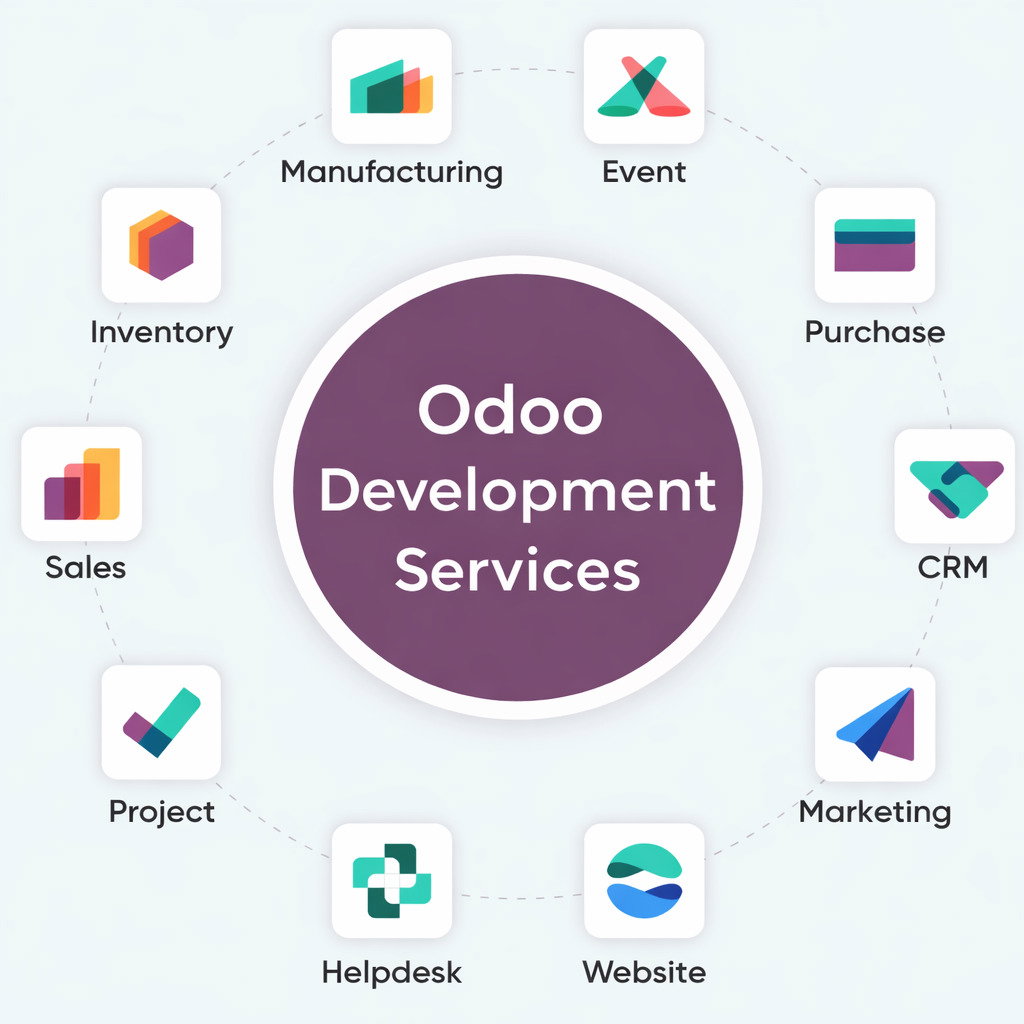
Enterprise Resource Planning (ERP) systems have become the backbone of modern digital businesses. Companies rely on ERP platforms to connect departments, automate workflows, manage data, and improve operational efficiency. However, not every organization can rely solely on out-of-the-box ERP functionality. Businesses often require systems that match their exact processes, industry requirements, and growth strategies.
This is where Odoo Development Services play a crucial role. Built around the flexible and modular architecture of Odoo, these services allow companies to customize ERP modules, develop new applications, integrate external platforms, and automate business workflows.
In this comprehensive guide, we explore how Odoo development services work, what types of customization and module development are available, and how organizations can leverage them to build scalable ERP systems.
Understanding Odoo Development Services
What Are Odoo Development Services?
Odoo Development Services refer to the technical processes involved in customizing, extending, and optimizing ERP systems built on the Odoo platform. While Odoo offers a wide range of built-in applications—such as CRM, accounting, inventory, manufacturing, and HR—many businesses need additional functionality or workflow adjustments.Odoo development services typically include:
- Custom module development
- Modification of existing modules
- Third-party system integrations
- Data migration from legacy software
- Performance optimization and system upgrades
Through these services, businesses can transform a standard ERP implementation into a customized platform designed to match their operational needs.
Why Businesses Use Odoo for ERP Development
Organizations across industries choose Odoo because of its adaptability and integrated application ecosystem. Unlike many traditional ERP systems, Odoo uses a modular architecture that allows developers to add or modify functionality without rebuilding the entire system.Some key advantages include:
- Modular design that supports custom development
- Open-source framework that allows deep customization
- Wide range of integrated business applications
- Scalable architecture suitable for small businesses and enterprises
- User-friendly interface that encourages employee adoption
Because of these advantages, companies can create tailored ERP systems that evolve as their operations grow.
Standard Odoo Implementation vs Custom Development
Businesses implementing Odoo typically begin with standard modules. However, these modules may not fully support specialized processes or industry-specific workflows.The difference between a standard implementation and custom development is significant:
| Aspect | Standard Implementation | Custom Odoo Development |
|---|---|---|
| Flexibility | Limited | Highly customizable |
| Implementation speed | Faster | Requires development time |
| Business alignment | Generic workflows | Tailored processes |
| Integrations | Basic integrations | Advanced integrations |
| Scalability | Moderate | High |
Custom development enables businesses to build ERP systems that align precisely with their operational strategies.
Core Types of Odoo Development Services
Professional Odoo development services typically focus on several key areas that enhance system functionality and business productivity.
Custom Odoo Module Development
The modular architecture of Odoo allows developers to create new modules that introduce specialized features into the ERP system.Custom modules can be designed to address unique business requirements such as:
- Manufacturing process tracking
- Advanced warehouse management systems
- Industry-specific reporting tools
- Custom CRM and sales management systems
- Workflow automation tools
These modules function as independent components, allowing organizations to expand ERP functionality without affecting existing features.
Odoo ERP Customization
Customization services focus on modifying existing modules to better match company workflows. Many businesses only require adjustments rather than completely new modules.Typical customization tasks include:
- Adding custom fields and forms
- Designing dashboards and analytics reports
- Automating approval processes
- Modifying user interface layouts
- Configuring role-based access permissions
These changes help ensure the ERP platform reflects real operational workflows.
Odoo Integration Services
Modern companies rely on numerous software platforms to manage operations. Without proper integration, employees must manually transfer data between systems, which increases errors and inefficiencies.Odoo integration services connect external systems with the ERP platform.Examples of common integrations include:
- Ecommerce platforms and online marketplaces
- Payment gateways and financial systems
- Shipping and logistics providers
- Marketing automation platforms
- External accounting software
Through integration, organizations can create a centralized system where data flows automatically between applications.
Odoo Migration and Upgrade Services
Many companies transition to Odoo after using legacy ERP software or outdated systems. Migration services help transfer business data and processes into the new ERP platform.Migration tasks may include:
- Extracting data from legacy databases
- Cleaning and transforming datasets
- Importing records into Odoo modules
- Testing and validating migrated data
Upgrade services are also important for businesses using older versions of Odoo. Upgrading ensures compatibility with new features, improved security, and better system performance.
Technical Architecture of Odoo Development
The flexibility of Odoo development services is supported by the platform’s modern technical architecture.
Technology Stack Behind Odoo
The Odoo platform is built using a powerful technology stack that enables scalability and customization.Core technologies include:
- Python backend framework for business logic and automation
- PostgreSQL database for secure data management
- XML architecture for defining user interface views
- JavaScript web client for interactive user experiences
This technology stack enables developers to create advanced ERP modules while maintaining system stability.
Internal Structure of Odoo Modules
Odoo modules are organized using a structured architecture that separates data models, user interfaces, and business logic.Key components include:
- Models – define database tables and relationships
- Views – determine how data is displayed in the interface
- Controllers – manage communication between users and backend systems
- Security rules – control access permissions
This architecture makes it easier to extend functionality without affecting existing modules.
Tools Used in Odoo Development
Developers use specialized tools to build and manage Odoo modules effectively.Common development tools include:
- Odoo Object Relational Mapping (ORM) framework
- Integrated development environments (IDEs) for Python programming
- Version control systems for managing code updates
- Testing frameworks for validating system performance
These tools ensure that development projects remain organized and maintainable.
The Odoo Development Lifecycle
A successful ERP development project follows a structured process that ensures alignment with business objectives.
Requirement Analysis and Business Workflow Mapping
The development process begins with a detailed analysis of the company’s operational requirements.Key activities include:
- Interviewing stakeholders and department managers
- Mapping current workflows and processes
- Identifying inefficiencies and automation opportunities
- Defining system requirements
This stage ensures that developers understand the organization’s operational needs before development begins.
System Architecture and Design
After gathering requirements, developers design the architecture of the ERP system.Important design considerations include:
- Database structure and data relationships
- Integration points with external systems
- Security and user access control
- Scalability for future growth
Proper system design ensures long-term stability and performance.
Development and Module Implementation
During this stage, developers begin creating custom modules and implementing ERP features.Typical development activities include:
- Writing backend logic using Python
- Designing user interfaces and forms
- Integrating APIs with third-party systems
- Automating workflows using scheduled actions
Development is typically carried out in iterative phases to allow continuous testing and improvement.
Testing and Quality Assurance
Testing is essential because ERP systems manage critical business operations.Testing procedures often include:
- Functional testing to verify features
- Performance testing to ensure system stability
- Security testing to protect sensitive business data
- User acceptance testing with employees
These tests help ensure that the system operates reliably.
Deployment and Post-Implementation Support
Once testing is complete, the ERP system is deployed in the production environment.Deployment tasks include:
- Installing modules on cloud or on-premise infrastructure
- Configuring user roles and permissions
- Training employees on system usage
Post-implementation support ensures the ERP system continues operating efficiently as business requirements evolve.
Real-World Applications of Odoo Development Services
Odoo development services are used across multiple industries to improve operational efficiency.
Manufacturing Automation
Manufacturers often require specialized production management systems. Custom modules can automate production planning, machine maintenance tracking, and quality control monitoring.These features help manufacturers reduce downtime and improve productivity.
Retail and Ecommerce Integration
Retail companies operate across multiple channels including physical stores and online marketplaces.Custom ERP solutions can provide:
- Real-time inventory synchronization
- Automated order processing
- Integrated point-of-sale systems
These features improve inventory accuracy and customer experience.
Logistics and Supply Chain Management
Logistics companies rely on real-time data to manage shipments and inventory.Custom modules can include:
- Fleet management systems
- Route optimization tools
- Multi-warehouse inventory tracking
These capabilities improve supply chain efficiency.
Customer Relationship Management
Sales teams benefit from customized CRM systems that track leads, manage pipelines, and analyze customer interactions.Custom development can add automation features such as lead scoring and sales forecasting.
Benefits of Odoo Development Services
Organizations investing in Odoo development services gain several strategic advantages.
- Customized workflows aligned with business processes
- Automation of repetitive tasks
- Centralized data management across departments
- Scalable ERP infrastructure supporting business growth
- Improved reporting and data analytics
These benefits allow companies to operate more efficiently and make better strategic decisions.
How to Choose the Right Odoo Development Partner
Selecting the right development partner is critical for ERP project success.Businesses should evaluate partners based on:
- Technical expertise with the Odoo platform
- Industry-specific experience
- Proven project management methodologies
- Availability of ongoing support services
- Client references and case studies
A reliable development partner provides both technical implementation and strategic guidance.
Frequently Asked Questions About Odoo Development Services
Can Odoo be customized for different industries?
Yes. The modular architecture of Odoo allows developers to create industry-specific modules for sectors such as manufacturing, retail, healthcare, logistics, and professional services.
What is an Odoo module?
An Odoo module is a software component that adds functionality to the ERP platform. Modules may include database structures, business logic, user interfaces, and automation workflows.
How long does an Odoo development project take?
The timeline depends on project complexity. Small customization projects may take several weeks, while large ERP implementations may take several months.
Is Odoo suitable for growing companies?
Yes. Odoo’s scalable architecture allows businesses to start with a few modules and expand functionality as their operations grow.
Risks and Considerations in Odoo Development Projects
While Odoo development offers many advantages, businesses should also consider potential challenges.Common risks include:
- Over-customization that complicates future upgrades
- Integration challenges with legacy systems
- Insufficient documentation for custom modules
- User adoption challenges during workflow changes
Proper planning and experienced developers can help mitigate these risks.
Final Thoughts: Building Scalable ERP Systems with Odoo Development
As businesses continue to adopt digital technologies, the demand for flexible and scalable ERP solutions continues to grow. Standard ERP implementations often provide a solid foundation, but many organizations require customization and integration capabilities to fully support their operations.
Through Odoo Development Services, companies can build ERP systems tailored to their workflows, integrate essential digital tools, and automate complex processes. The modular architecture of Odoo makes it possible to expand system capabilities gradually while maintaining stability.
For organizations seeking long-term operational efficiency and digital transformation, investing in Odoo development services provides a powerful pathway to building a modern and scalable ERP ecosystem.
