Choosing Odoo POS Restaurant: Features, Pricing Structure, and Suitability
In today’s hospitality landscape, choosing the right Point of Sale (POS) system is no longer just a technical decision—it is a strategic one. Restaurants, cafés, and hospitality groups operate under constant pressure from rising costs, labor shortages, demanding customers, and the need to manage multiple sales channels seamlessly. A POS system now sits at the heart of daily operations, influencing everything from service speed and guest experience to inventory accuracy and financial visibility.
Among the many solutions available on the market, Odoo POS Restaurant has emerged as a compelling option for hospitality businesses seeking more than a traditional POS. Instead of focusing only on order taking and payments, Odoo POS Restaurant is designed as part of a broader, integrated business platform.
Based on real-world advisory and implementation experience from Havi Technology, this in-depth guide explores Odoo POS Restaurant from three critical perspectives: features, pricing structure, and suitability. The goal is to help hospitality decision-makers understand not just what Odoo POS Restaurant offers, but whether it truly fits their operational reality and long-term growth plans.
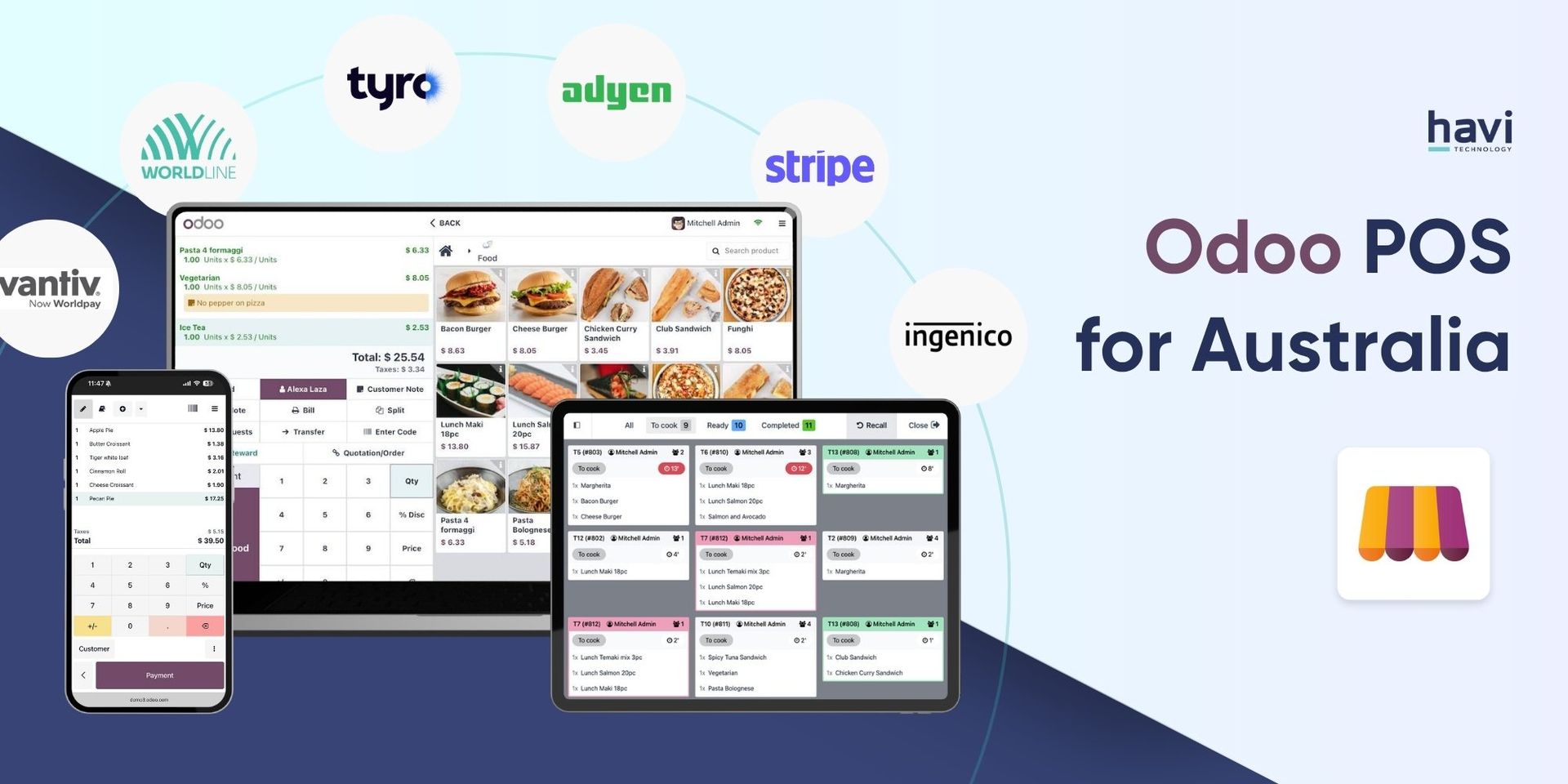
Understanding Odoo POS Restaurant in the Hospitality Ecosystem
What Is Odoo POS Restaurant?
Odoo POS Restaurant is a specialized configuration of Odoo’s Point of Sale module, tailored specifically for restaurant and hospitality operations. It supports common hospitality use cases such as:
- Dine-in service
- Takeaway and quick service
- Table and floor management
- Kitchen coordination
- Split billing and tipping
What makes Odoo POS Restaurant fundamentally different from many hospitality POS systems is that it operates inside the Odoo ERP ecosystem. This means the POS is natively connected to inventory, accounting, purchasing, HR, CRM, and reporting modules.According to Havi Technology, this integrated architecture is the primary reason hospitality businesses consider Odoo POS Restaurant when they outgrow standalone POS solutions.
Why Restaurants Are Rethinking Traditional POS Systems
Traditional POS systems are typically optimized for speed and simplicity. They work well for small, single-location restaurants with limited operational complexity. However, as restaurants scale, diversify menus, or expand service channels, these systems often reveal limitations.Havi Technology frequently encounters hospitality businesses struggling with:
- Disconnected inventory and POS data
- Manual reconciliation between POS and accounting
- Limited reporting beyond daily sales
- Poor visibility into food costs and margins
Odoo POS Restaurant addresses these challenges by positioning the POS as part of a unified operational platform rather than an isolated sales tool.
Core Features of Odoo POS Restaurant
User Interface and Ease of Use
Odoo POS Restaurant is designed to be intuitive and touchscreen-friendly. Orders can be taken quickly using tablets or terminals, with minimal navigation required.From Havi Technology’s experience, most front-of-house staff can become comfortable with the interface after short training sessions. However, ease of use depends heavily on how well the system is configured to reflect real service workflows.
Floor Plan and Table Management
One of the most valuable features for dine-in hospitality businesses is floor and table management. Odoo POS Restaurant allows managers to design digital floor plans that mirror physical layouts, including:
- Multiple dining rooms or floors
- Different table sizes and shapes
- Bar seating and outdoor areas
Servers can see table status in real time—occupied, free, waiting for order, or ready for billing. According to Havi Technology, this feature significantly improves service coordination during peak hours, especially in busy restaurants and hospitality venues.
Order Management and Flexibility
Hospitality service is dynamic. Guests add items, change orders, or request modifications. Odoo POS Restaurant allows orders to be edited at any stage before final billing.While this flexibility improves guest satisfaction, Havi Technology emphasizes the importance of role-based permissions. Without proper controls, excessive order changes can impact reporting accuracy and accountability.
Kitchen Communication and Workflow
Kitchen Printers and Kitchen Display Screens
Odoo POS Restaurant supports both traditional kitchen printers and digital kitchen display systems (KDS). Orders are sent automatically to the kitchen based on predefined routing rules.
- Kitchen printers are simple and low-cost
- Kitchen screens offer real-time visibility, prioritization, and status updates
Based on Havi Technology’s implementations, restaurants often start with printers and later adopt kitchen screens as volume and complexity increase.
Course Management and Order Timing
For fine dining and structured service environments, Odoo POS Restaurant supports delayed order sending and course-based service. Starters, mains, and desserts can be released to the kitchen in stages.
Havi Technology notes that this feature delivers real value only when service processes are clearly defined and staff are trained to use it consistently.
Billing, Payments, and Guest Experience
Split Bills and Group Dining
Handling group dining is a daily reality in hospitality. Odoo POS Restaurant supports multiple split-bill scenarios, including:
- Splitting by guest
- Splitting by item
- Partial payments
From Havi Technology’s perspective, this flexibility reduces checkout friction and improves the overall guest experience.
Payment Methods, Tips, and Discounts
Odoo POS Restaurant supports a wide range of payment methods, including cash, cards, and digital wallets, depending on integrations and local regulations.Tipping, discounts, and promotions can be configured based on business rules. Havi Technology advises defining these rules carefully, as they can impact staff compensation, financial reporting, and tax compliance.
Tax Configuration and Compliance
Restaurants often face complex tax scenarios, especially when offering dine-in, takeaway, and delivery services. Odoo POS Restaurant allows different tax rules to be applied based on service type.According to Havi Technology, tax misconfiguration is one of the most common implementation risks, making expert setup essential.
Back-Office Integration: A Key Differentiator
Inventory and Recipe Management
One of the strongest advantages of Odoo POS Restaurant is its real-time integration with inventory. When recipes and bill-of-materials are configured correctly, ingredient consumption is tracked automatically with each sale.
Havi Technology highlights several benefits of this approach:
- Accurate food cost tracking
- Reduced waste and shrinkage
- Better purchasing decisions
Purchasing and Supplier Control
Sales data from Odoo POS Restaurant feeds directly into purchasing workflows. Reorder points, supplier lead times, and price changes can be managed centrally.This level of integration is particularly valuable for hospitality businesses dealing with volatile supply chains, as noted by Havi Technology.
Accounting and Financial Visibility
Unlike many POS systems that require data exports, Odoo POS Restaurant posts transactions directly into Odoo Accounting. This provides real-time insight into revenue, margins, and profitability.From Havi Technology’s experience, this unified financial flow significantly reduces reconciliation errors and improves decision-making.
Odoo POS Restaurant Pricing Structure Explained
Odoo’s Modular Pricing Model
Odoo uses a modular pricing structure. Hospitality businesses typically pay for:
- POS user licenses
- Additional Odoo apps (Inventory, Accounting, Purchasing, HR, etc.)
- Hosting (Odoo Online, Odoo.sh, or On-Premise)
According to Havi Technology, the POS license itself is often only a small portion of the total cost.
Implementation and Customization Costs
Implementation costs vary based on:
- Number of locations
- Complexity of workflows
- Level of customization and integration
Havi Technology consistently advises restaurants to budget realistically for implementation, as underestimating this phase is a common source of project failure.
Hardware and Infrastructure Costs
Restaurants must also consider hardware investments, including:
- POS terminals or tablets
- Kitchen printers or display screens
- Reliable networking infrastructure
Based on Havi Technology’s experience, poor hardware planning can undermine even the best software implementation.
Evaluating Total Cost of Ownership (TCO)
Short-Term Costs vs Long-Term Value
Traditional POS systems often appear cheaper upfront. However, Odoo POS Restaurant can deliver long-term value through:
- Improved inventory accuracy
- Reduced manual work
- Better operational insights
Havi Technology frequently observes that growing hospitality businesses achieve stronger ROI over time with Odoo compared to disconnected systems.
Cost Predictability and Scalability
Odoo’s modular model allows businesses to scale functionality as needed. However, Havi Technology stresses the importance of planning future requirements to avoid unexpected costs as operations grow.
Suitability: Is Odoo POS Restaurant the Right Choice?
Cafés and Small Restaurants
For small cafés, Odoo POS Restaurant is suitable when owners want more control over inventory, reporting, and growth planning. Very small operations may find it more powerful than necessary.
Casual and Full-Service Restaurants
Casual and full-service restaurants benefit significantly from Odoo’s flexibility, integration, and reporting depth. Havi Technology often recommends Odoo POS Restaurant for these businesses.
Fine Dining and Hotel Restaurants
Fine dining and hotel restaurants benefit from structured workflows, course management, and financial transparency. According to Havi Technology, Odoo POS Restaurant performs particularly well in these environments when implemented correctly.
Multi-Location Hospitality Groups
For hospitality groups and chains, Odoo POS Restaurant offers centralized control, standardized processes, and consolidated reporting—key requirements for scalable growth.
Risks and Challenges to Consider
Operational and Change Management Risks
Common challenges include:
- Resistance to new workflows
- Insufficient staff training
- Over-customization
Havi Technology emphasizes that successful adoption depends as much on people and processes as on technology.
Technical and Integration Risks
Potential technical challenges include:
- Network reliability
- Hardware compatibility
- Integration with third-party delivery platforms
Thorough testing and phased rollouts are strongly recommended by Havi Technology.
Best Practices for Successful Implementation
Based on Havi Technology’s experience, successful Odoo POS Restaurant projects typically follow these practices:
- Map real hospitality workflows before configuration
- Limit customization to business-critical needs
- Invest in staff training and change management
- Run pilot phases during live service
- Provide ongoing post-go-live support
Final Thoughts: Choosing Odoo POS Restaurant with Clarity
Choosing a POS system is one of the most impactful technology decisions a hospitality business can make. Odoo POS Restaurant stands out not because it is the simplest option, but because it is one of the most integrated and scalable.From Havi Technology’s real-world experience, Odoo POS Restaurant is best suited for hospitality businesses that:
- Require strong operational visibility
- Plan to scale or diversify service models
- Are willing to invest in proper implementation and training
When chosen for the right reasons and implemented with discipline, Odoo POS Restaurant becomes more than a POS - it becomes a strategic foundation for sustainable hospitality growth.
