AI in Manufacturing Systems: Technologies, Benefits, and Real-World Use Cases
Artificial intelligence (AI) has become a defining capability of modern manufacturing systems. What once relied on rigid automation, manual decision-making, and reactive maintenance is now evolving into intelligent, adaptive, and self-optimizing production environments. Today, AI in manufacturing systems enables factories to predict failures, optimize processes, ensure consistent quality, and respond dynamically to changing demand and operational conditions.
Rather than being a standalone technology, AI is increasingly embedded across manufacturing systems—connecting machines, data, software, and people into a cohesive intelligence layer. At Havi Technology, we support manufacturers in designing and implementing AI-enabled manufacturing systems that integrate seamlessly with real-world operations, legacy infrastructure, and long-term business goals.
This guide provides a comprehensive and practical explanation of AI in manufacturing systems, covering the underlying technologies, measurable benefits, real-world use cases, and implementation considerations that manufacturers need to understand to succeed.
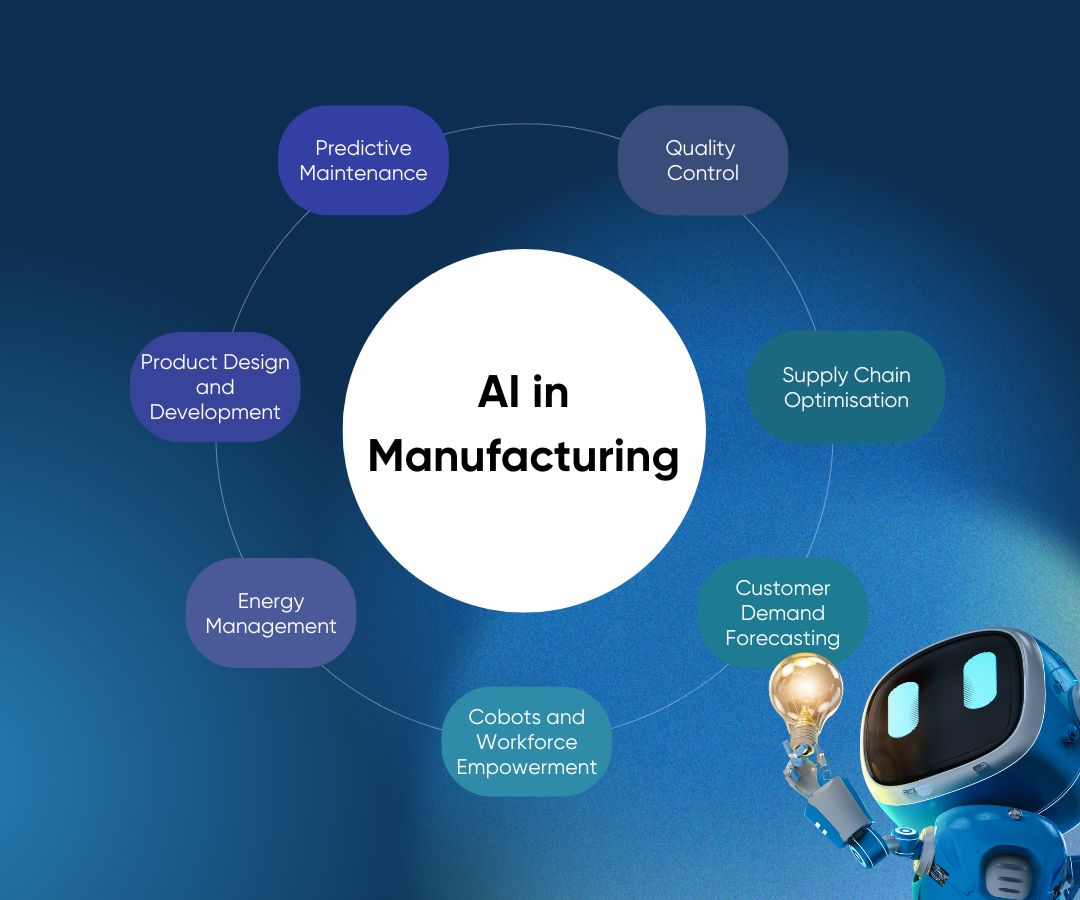
1. What Are AI-Driven Manufacturing Systems?
1.1 Defining AI in Manufacturing Systems
AI in manufacturing systems refers to the integration of artificial intelligence technologies into the core systems that manage, control, and optimize manufacturing operations. These systems include:
- Production equipment and machines
- Manufacturing Execution Systems (MES)
- Enterprise Resource Planning (ERP) systems
- Supervisory Control and Data Acquisition (SCADA) systems
- Quality, maintenance, and supply chain platforms
AI enhances these systems by enabling them to learn from data, detect patterns, predict outcomes, and recommend or automate decisions. Unlike traditional manufacturing systems that rely on static rules, AI-driven systems continuously improve performance as new data becomes available.
1.2 How AI Changes Traditional Manufacturing Systems
Traditional manufacturing systems are designed for stability and repeatability. AI introduces adaptability and intelligence.Key shifts include:
- From reactive to predictive operations
- From manual optimization to automated decision intelligence
- From isolated systems to connected, learning ecosystems
This transformation is the foundation of smart factories and Industry 4.0 initiatives.
2. Core Technologies Powering AI in Manufacturing Systems
2.1 Machine Learning and Deep Learning
Machine learning (ML) enables manufacturing systems to analyze large volumes of structured and unstructured data to identify patterns and make predictions. Deep learning, a subset of ML, is especially effective for complex data such as images, sound, and high-frequency sensor signals.In manufacturing systems, ML is used for:
- Predictive maintenance
- Process and yield optimization
- Demand forecasting
- Anomaly detection
Deep learning models improve accuracy in tasks such as visual inspection and pattern recognition that were previously difficult to automate.
2.2 Computer Vision Integrated into Production Systems
Computer vision enables manufacturing systems to interpret visual data from cameras and sensors. When integrated into production lines and quality systems, computer vision allows for real-time inspection and verification.Common applications include:
- Surface defect detection
- Dimensional measurement
- Assembly verification
- Packaging and labeling checks
These systems operate continuously and consistently, outperforming manual inspection in speed and accuracy.
2.3 Optimization and Decision Intelligence Engines
Optimization algorithms evaluate thousands or millions of scenarios to determine the best possible decisions under given constraints. In manufacturing systems, AI-driven optimization supports:
- Production scheduling
- Resource allocation
- Energy management
- Inventory optimization
Decision intelligence engines integrate optimization with real-time data, enabling systems to adapt plans dynamically as conditions change.
2.4 Natural Language Processing (NLP)
Natural language processing allows manufacturing systems to analyze unstructured text and spoken language. While less visible on the shop floor, NLP enhances system intelligence by extracting insights from:
- Maintenance logs
- Operator reports
- Quality documentation
- Technical manuals
NLP also supports conversational interfaces, enabling operators and technicians to interact with manufacturing systems more intuitively.
2.5 Edge AI and Industrial IoT (IIoT)
Manufacturing systems generate massive volumes of data from machines and sensors. Edge AI processes this data close to its source, enabling real-time responses without relying solely on cloud connectivity.When combined with Industrial IoT (IIoT), edge AI allows manufacturing systems to:
- Detect anomalies instantly
- Reduce latency
- Improve reliability and resilience
- Maintain operations during network disruptions
3. Real-World Use Cases of AI in Manufacturing Systems
3.1 Predictive Maintenance Systems
Predictive maintenance is one of the most widely adopted AI use cases in manufacturing systems. By analyzing sensor data such as vibration, temperature, and power consumption, AI models predict when equipment is likely to fail.System-level benefits include:
- Reduced unplanned downtime
- Lower maintenance costs
- Improved asset utilization
Based on implementation experience at Havi Technology, predictive maintenance systems often deliver rapid ROI because they address a clear operational pain point using existing machine data.
3.2 AI-Driven Quality Management Systems
AI-powered quality management systems use computer vision and machine learning to detect defects and process deviations in real time.Applications include:
- Automated visual inspection
- Root cause analysis of quality issues
- Continuous quality monitoring
By integrating AI into quality systems, manufacturers can move from reactive defect detection to proactive quality assurance.
3.3 Intelligent Production Planning and Scheduling
AI-enhanced planning systems analyze demand forecasts, machine availability, labor constraints, and material supply simultaneously. Unlike traditional planning tools, AI-driven systems continuously update schedules as conditions change.Results include:
- Improved on-time delivery
- Reduced bottlenecks
- Higher production flexibility
3.4 Process Optimization and Control Systems
AI models embedded in process control systems continuously analyze production parameters to identify optimal operating conditions.Use cases include:
- Yield improvement
- Energy efficiency optimization
- Cycle time reduction
Over time, these systems learn which settings produce the best outcomes under varying conditions.
3.5 AI-Enabled Supply Chain Systems
AI in manufacturing systems extends beyond the factory floor into supply chain planning and execution. AI improves forecasting accuracy and helps manufacturers respond to demand volatility and supply disruptions.Key benefits include:
- Reduced inventory levels
- Improved service levels
- Greater supply chain resilience
3.6 Robotics and Autonomous Manufacturing Systems
AI-powered robots and autonomous systems are increasingly integrated into manufacturing environments. Collaborative robots (cobots) work alongside humans, adapting to variability and enhancing productivity.Applications include:
- Material handling
- Assembly
- Palletizing
- Inspection and testing
4. Benefits of AI in Manufacturing Systems
4.1 Increased Operational Efficiency
AI automates complex analysis and decision-making, enabling manufacturing systems to operate more efficiently. This leads to higher throughput, reduced waste, and improved overall equipment effectiveness (OEE).
4.2 Improved Quality and Consistency
By detecting defects and deviations early, AI-driven systems ensure consistent product quality and reduce rework and scrap.
4.3 Cost Reduction and Asset Optimization
AI reduces costs by minimizing downtime, optimizing energy usage, and extending asset lifecycles.
4.4 Enhanced Workforce Productivity
AI augments human capabilities rather than replacing them. Operators, engineers, and managers gain better insights and decision support, allowing them to focus on higher-value tasks.
4.5 Faster and More Accurate Decision-Making
Real-time insights enable manufacturing systems to respond quickly to changing conditions, improving agility and competitiveness.
5. Measuring ROI from AI in Manufacturing Systems
5.1 Why ROI Is Critical
Demonstrating ROI is essential for scaling AI initiatives beyond pilot projects. Manufacturers must link AI investments to measurable business outcomes.
5.2 Key ROI Metrics
Common metrics include:
- Downtime reduction
- Maintenance cost savings
- Yield improvement
- Scrap and rework reduction
- Energy savings
- Inventory reduction
5.3 Typical ROI Timelines
ROI timelines vary by application:
- Predictive maintenance and quality inspection often show results within months
- Planning and optimization systems may take longer but deliver sustained value
From experience at Havi Technology, prioritizing data-ready, high-impact use cases accelerates ROI realization.
6. Implementing AI in Manufacturing Systems
6.1 Define Clear Business Objectives
Successful AI implementation starts with clearly defined goals aligned with business priorities. AI should solve specific problems, not be deployed for its own sake.
6.2 Assess Data Readiness and System Integration
AI systems depend on high-quality, integrated data. Manufacturers must assess:
- Data availability and accuracy
- System interoperability
- Infrastructure readiness
6.3 Start with Pilot Projects
Pilot projects allow organizations to validate value, refine models, and build internal confidence before scaling AI across manufacturing systems.
6.4 Scale with Governance and Architecture
Scaling AI requires standardized architectures, governance frameworks, and ongoing monitoring to ensure performance, security, and compliance.
6.5 Invest in Skills and Change Management
AI adoption requires new skills and cultural changes. Training and communication are essential to build trust and adoption across the organization.
7. Challenges and Risks of AI in Manufacturing Systems
7.1 Data Quality and Availability
Poor data quality can undermine AI performance and erode trust in system outputs.
7.2 Integration with Legacy Systems
Many manufacturers operate legacy equipment and systems that were not designed for AI integration, increasing complexity.
7.3 Cybersecurity and Data Privacy
As manufacturing systems become more connected, cybersecurity risks increase. Robust security measures are essential.
7.4 Ethical and Responsible AI Use
Manufacturers must ensure transparency, fairness, and accountability in AI-driven decisions, especially when safety or workforce impacts are involved.
8. AI as the Intelligence Layer of Smart Manufacturing Systems
Smart manufacturing systems integrate AI, IoT, automation, and analytics into a unified ecosystem. AI acts as the intelligence layer that connects data, systems, and people.Key characteristics include:
- Real-time operational visibility
- Autonomous optimization
- Continuous learning and improvement
- Human–AI collaboration
In this context, AI in manufacturing systems is not an add-on—it is a core capability that enables digital transformation.
9. Frequently Asked Questions About AI in Manufacturing Systems
Is AI in manufacturing systems only for large enterprises?
No. Scalable AI solutions are increasingly accessible to small and mid-sized manufacturers.
How does AI integrate with MES and ERP systems?
AI typically integrates via APIs and data pipelines, enhancing decision-making without replacing existing systems.
Can AI manufacturing systems operate in real time?
Yes. With edge AI and IIoT integration, many AI systems operate in near real time on the factory floor.
Does AI replace human decision-making?
AI primarily supports and augments human decision-making, improving speed, accuracy, and consistency.
10. Conclusion: Building Intelligent Manufacturing Systems with AI
AI in manufacturing systems represents a shift from static, rule-based operations to intelligent, adaptive, and continuously improving environments. By embedding AI into core manufacturing systems, organizations can unlock significant gains in efficiency, quality, resilience, and competitiveness.At Havi Technology, we see the most successful manufacturers treat AI as a long-term capability rather than a one-time technology project. By aligning AI initiatives with business objectives, investing in data and people, and scaling responsibly, manufacturers can build intelligent manufacturing systems that deliver measurable value today and remain resilient in the future.
